I got tired of all the music that was in my car. I kept flipping through my CD case and none were matching my moods. So, I found a stash of old CDs and blew the dust off of them. Among them are some gems. I decided to list a few here under the category: “CDs that are (surprisingly) still good after 10 years.”
Now, this isn’t an exhaustive list, and in no particular order, just a list of a few CDs that you might not have expected to still be good.
Chicago Greatest Hits 1982-89
This album has a song for every season of romance. (That is, every season I’ve experienced at least. And while maybe it glorifies unrealistic ideals, it gives a naïve bachelor like me something to hope for.) Peter Cetera croons like no other. And I think “If She Would Have Been Faithful” taught me the meaning of paradox: “It’s a paradox/Full of contradictions/How I got from there to here/It defies a LOGICAL expluh-NATION!!!”
Newsboys Going Public
I recently mentioned my affinity for this album to Jon. While Take Me To Your Leader is primarily light and happy (even “Breakfast”), Going Public has a darker feel to it. Jon agreed but pointed out the irony that the CD’s, and probably the band’s, most popular song was titled, “Shine.”
Delirious Cutting Edge, CD 2
“When All Around Has Fallen” is a song enough to make this album worthwhile. And while this isn’t the polished Delirious that most of the U.S. knows, the unpolished musicality lends credence to authenticity and the focus toward building up followers of Jesus unifies the album.
Duncan Sheik Untitled
I first saw “Drunken Sheep,” as I’d heard it, open up for Jars of Clay. Considering the faith of the main act, my 6th grade opinion was that it was a clever mixed metaphor, but I think Sheik is Buddhist or eclectic at least. I actually took this album to a used CD store and sold it. At the time, his music seemed depressing and hopeless. A few years later, I needed to hear it again so I went and bought a new copy. I liked it more the second time. I've found this to be a trend in my musical growing-up. The quieter sounds on this album make the hopeful ones brighter, among them, “Reasons for Living.”
The Wallflowers Bringing Down the Horse
I got this album in Toronto the summer before my sophomore year of high school. The Wallflowers was a moderately popular band, fronted by Bob’s son, Jakob Dylan. While the album’s sound fluctuates, it manages to create a mood and makes use of great images that teach lessons: “This place is a whorehouse tonight/Where cheap lovers make expensive wives.”
Music has an unparalleled ability to influence moods and thoughts. More dire concerns have prevailed, but rock music used to be a point of contention and still is among many Christian parents. I think certainly that music has the power to shape us, to shift us to some of the highest highs and lowest lows.
Music has become for me an emotion manager. I often select CDs that will allow me to indulge my mood. Creed used to be my anger music. Fortunately I hardly listen to that them anymore, and not at all for that reason. The Juliana Theory captures a lonelier time in my life just after college. Coldplay captures soaring melodies of hope in love, life, and humanity, and Switchfoot does the same in stark relief to the despair of the human condition.
I haven’t decided if using music to indulge or shift my moods is a good thing. It could be a form of self-control, moving me out of darker brooding. Or maybe it’s only self-manipulation and dependency. Like almost anything, I think that it can be a good servant but a terrible master.
I was at Ignite Chicago last summer listening to Casting Crowns, another band that knows what they’re playing music for. I remember the lead singer saying this: “Music has the power to move and shape us, to motivate and enliven us. But faithfulness isn’t about living in those moments. Music creates an experience, but those moments don’t last. Even the best song grows stale.”
Wednesday, July 23, 2008


Tuesday, July 22, 2008
Obama, McCain and Rick Warren

Adam alerted me to this story.
Barak Obma and John McCain are taking their roadshows to
Part of me wants to call out Saddleback for becoming a platform or for the government. I believe the church needs to engage the realm of governmental politics. After all this is the very world we are called by the church. Yet, has Saddleback sold out their allegiance to Christ by providing and promoting these two candidates? Why do these two men have to come and speak at the church of all places? We are called to engage the government but is this too far?
The other part of me recognizes that this Fall, John McCain or Barak Obama will be the president of the
No conclusions. Just things to think about.
Friday, July 18, 2008
Tailgate meets Garage Sale

The dream for Tailgate meets Garage Sale started over a year ago. I, and most of my friends, don't have garages of our own (if they do, I burden them with storing my motorcycle there), but I've got plenty of stuff that I would sell if I had a place to sell it. My Grand Prix's trunk is my garage these days. I store extra oil, tools, straps, rollerblades, gas cans, and more in there.
The idea for selling out of my trunk sounded a little ghetto and sketchy. I don't do well with people walking or driving by staring and wondering about my mental capacity. But I figured, "If I get a lot of people to do it together, it'll seem normal." Or at least, we won't notice the passersby staring. Crowds of people can make almost anything seem normal (except for this one time at the Taste of Chicago...).
The idea of giving part of the proceeds to Feed My Starving Children? I don't know how that idea came up. I don't remember it being my idea, but I'm glad for whoever came up with it. That really became the motivating force behind making the Tail happen. Tailgate meets Garage Sale became about more than making money, hanging out with friends, or getting rid of stuff. It's no longer buyers here and sellers there but people joining together to help neighbors in our global community. It's a bunch of strangers getting together and having something in common. It's a force for good.
And with all these people, this little dream is now bigger than me. That's a dream worth having.
(P.S. If you'd like to get in on the action, throw some stuff in your trunk, drive over to Evangelical Free Church of Naperville tomorrow, and join the party.)
Wednesday, July 16, 2008
Did that just happen?

Something I have wondered for a long time is how do you measure faith? Jesus describes faith in terms of a mustard seed (Matt 17:20 and Luke 17:6) which leads me to think of faith in terms of attainment. I figure it's good to have faith the size of a mustard seed but faith the size of a squash or bean seed is so much more effective and powerful. I don't have any conclusions but I'm pretty sure that is wrong.
Here is how this plays out in real life for me. On Saturday night I went to the Pittsburgh Pirates vs St. Louis Cardinals game while on my visits in the East. It was my g-parents family reuinion and all the family got together to go see the hapless Pirates. Our family is really close and the one thing we can all agree on is the Pirates are bad and that we love the Pirates. Despite their patehtic play for the last 15 years we follow them and remain optimistic every year.
This night was no different. At the 8th inning the Pirates were losing 10-4. (They were being outhit as of the 5th inning 17-2!) Then it started to rain. Then the fans started to leave. But my family and I saw an opportunity for fun. The Pittsburgh Steelers are famous for the Terrible Towel that gets waved during the football games. Well at this particular game they were giving away free beach towels. So we began to wave around our beach towels and just start cheering like the Pirates were in the World Series.
Surprise, surprise they put up 2 runs in that inning and all the sudden the score was 10-6. But the comeback ended and we started to gather up our stuff and head to a place shiedled from the rain and close to an exit.
The bottom of the 9th comes around and we are still jovially waving our towels. And it happened. I got this weird feeling after a lead off single that a comback could be in store. The single was folowed by a walk. Than a homerun. 10-9. Than a single. Than a double. Than an infield force out 10-10! Extra innings.
Of course in the 11th the Pirates gave up the lead and now were losing 10-11. But you had this feeling they were going to win. This belief, this mustard seed size of faith they would win. Bottom of the 11th. A lead of single. Than Jason Michaels steps up and cranks a homerun over the fence and the 15,000 fans left went crazy.
We all lost our voices. We stayed up late in the night re-telling the story over and over again. I guess I had a small amount of faith and I don't know if it is comparable to what Jesus is talking about. But I wanted to tell that story. And I want to let you know that as much as I believe in the Pirates comeback ability I believe more in Jesus' comeback ability.
Tuesday, July 15, 2008
"He placed his hands on their heads and blessed them before he left."
I saw this photo in a recent Newsweek:
 And it made me think of some similar pictures I've seen:

 And it made me think of some similar pictures I've seen:
It seems Bill's a bit more popular than Jesus though.
Thursday, July 10, 2008
Things that could be on
On Getting Off Your Computer:
For all our efficient mass communication of the gospel, nothing changes a life like a real relationship.
Having the means of reaching the masses--for instance, through podcasting--is a good thing. Yet, nothing matches the potency of life-on-life discipleship. In this respect, social networking and blogs can be effective tools to intimately connect with a small, natural network of relationships.
On Getting Perspective:
I can always use a little perspective like this:
There is no virtue in being the cool, high-tech church, or in being the low-tech, minimalistic church.
On Spilling Your Guts:
Blogging as therapy. You won't see this from me anytime soon. I've argued that blogging about friends isn't generally a good idea. Plus, I'm vulnerable about as often as a one-armed man signals a lane change. Oh sure, it happens. But when it does everyone behind him gets annoyed because he forgets to turn his blinker off.
On Being Young:
A study by the Journal of Consumer Research to be released next month, titled "Tightwads and Spendthrifts," finds that people ages 18 to 40 are most likely to say they're spending beyond their comfort range.
from “A Penny Saved Is a Penny Spent” in Newsweek.
It's surprising that 18- to 30-year-olds, the most pro-life demographic in a generation, are the same voting bloc from which Barack Obama, the most antilife presidential candidate ever, draws his most ardent supporters.
from “The Audacity of Death” in WSJ.
Tuesday, July 08, 2008
Middle Earth, Victorian times, and more recent developments
In the past I’ve written on text messaging and, separately, on the tyranny of happiness. More recently, I’ve run across other articles about both and wanted to share them with you.
Text Messaging
The Economist had two good articles on text messaging. The first describes how text messaging is, in the opinions of some, decimating the French language. The second is a rebuttal by a reader who has done research on text messaging, arguing that “Rebuses such as C for “see” and U for “you” were common in Victorian times.”
Anything interesting can be boring if your work hard enough. Here’s a research study on adolescent text messaging, otherwise known as “socially interactive technologies” or “SITs.” The research concluded that “adolescents in the study were not creating more ties using SITs, nor were they necessarily creating weaker SIT-based ties; that there was little overlap between SIT-facilitated and offline social networks; and that socially-isolated adolescents were less likely than other adolescents to use SITs.”
Here’s another article about a text-messaging researcher. One paragraph reads:
The findings have been counterintuitive. “Contrary to existing perceptions, there’s a developing logic to texting,” Shuter says. Young people will use texting for short, quick messages — such as “Where r u?” — instead of more personal conversations.
This trend is encouraging to me because, in my text messaging post, I advocated for informational, not conversational, text messaging as being the healthiest use of this technology for relationships.
Finally, much like the lolcat Bible (warning: explicit content), there is now an SMS Bible (i.e., a text-messaging Bible). The Bible’s famous opening line, sounds more like a bad rap album title: “In da Bginnin God cre8d da heavens & da earth.” (more here.)
One concern for me about this arises from the previous text-messaging research. If it’s primarily used for informational purposes, will the SMS Bible simply be recieved as a transmission of information? Of course, the Bible has always been in danger of being received as such.
Happiness
There are plenty of books out there trying to make you happy. Heck, we publish some of them. But there are a few that are expressly interested in studying happiness. Perhaps, for you, this is more evidence that anything interesting can be boring if you try hard enough. Another book in this vein is The Middle Way: Finding Happiness in a World of Extremes by Lou Marinoff.
More research on happiness shows that Denmark is the McDonald’s of the world’s countries. That makes Zimbabwe similar to eating dog food. The US, meanwhile, is just behind Middle Earth, making it akin to a bean patch.
But, you wouldn’t necessarily know it. While US exports pale in comparison to our imports, we’re still exporting a lot of cash in the way charitable contributions: $306 bn in 2007, up 1% over 2006 (adj. for inflation). That makes me happy.
Monday, July 07, 2008
The American church

I don't write many posts like this but this one has just been stirring. If you didn't notice the church in America is changing. If I can generalize there seems to be two camps.
The first is the institutional or traditional churches that you can find in droves all across the landscape. The Baptist, Methodist, Lutheran, churches with a paid staff and weekly worship services on Sundays.
The second is emerging/Emergent/missional/organic/house churches. I know these aren't all the same but I'm going to lump them all together. A lot of these churches have denominational roots but they aren't traditional because they meet in third spaces, houses, don't have paid "professional" pastors, are organized around outreach, etc.
So for me, and a lot of peers in Seminary or preparing to enter the ministry, we are faced with this question among several. What type of church should I work in? I am drawn to the second group and there is a lot of buzz around this camp. A good deal of my education is from these leaders and I read/write/study in their stream. But I do not believe, as some say, that the institutional church is irrelevant and needs to go. Recently I have had people tell me to not even consider working in a church like this.
Look I agree that there are abuses of power, failures in leadership, weak discipleship, and monotonous worship services in the traditional churches. I think a lot of ways these churches operate needs to change. But using a cliche, let's not throw the baby out with the bathwater.
No one can tell me that every institutional church needs to all the sudden take the form of a emerging/Emergent church. Actually I can't think of anything that would be worse. We need to remember context, context, context.
A lot of emerging/Emergent churches have their shape because of their location. For example, in the city you can have a church that meets in a coffee shop and does a lot of social outreach to the homeless. The church uses the coffee shop space to house worship services, art showings, poetry, concerts. There are so many people, and so many diverse people in the city it thrives. The space is also used to house the homeless, give out free food, and provide counseling for a lot of people who can't afford it.
However, in the suburbs, (it is still possible but more difficult) that church might be redundant because of location. The way the suburbs are spread out means that homeless people might not be able to access a coffee shop as easily. Moreover, there might not be as many homeless people around them to necessitate such a strong ministry focus. In the burbs a lot of people maybe aren't looking for a "3rd place" to gather ever evening that does social activities. The pace of their life and the space of their personal living quarters means that they don't want to drive out every night or have other commitments.
What both churches need to do is to look at the needs in their neighborhood/context/location and be faithful. I do think that a lot of things about the traditional church need to change. I would agree that in the future more and more tradional churches are going to take the shape of emerging/Emergent churches. They will become more de-centralized in leadership and denominations will not hold as much authority as they once did. They will need to change their worship styles, formats, and meeting forms as people care less and less about institutions and more about customizing their own lives.
However, that does not mean they do not have a purpose and place. I see no reason why these churches cannot remain and change. I think the emerging/Emergent cohort often looks down on the traditional churches with disdain. It tends to be a more liberal group and this unfortunately reeks of elitism and snobbery. Instead of chastising the traditional church we should dialogue and working along side with them.
There are not two camps. Rather there is one church. This church in America takes different shapes and we need to learn from each other and consider the wideness of God.
Thursday, July 03, 2008
Some conversation topics
 The photo isn't relevant to the post but it just funny. (But kind of creepy) If you want to avoid putting your foot in your mouth here are some things to talk about. I don't endorse all of these statistics since something like 70% percent of statistics are made up (I just made that up). So feel free to Google if you want verification.
75% of Pandas are left handed
Over 80% of men flush the urinal before they are finished
Irish people average 6 cups of tea a day. The most in the world.
The Marsh I work at holds enough water to fill 3,000 Olympic size swimming pools.
People eat more on July 4th than on Thanksgiving.
And remember, I'm good enough, I'm smart enough, and gosh darn it, people like me!
Thursday, June 26, 2008
A Garden Metaphor

At work on Monday I spent the day killing. I looked like a Dan Akroyd from the Ghostbusters outfitted with a big plastic backpack some gloves and a hose. But instead of fighting ghosts I was battling weeds.
The battle is going to rage on because my garden, that was severely ravaged by a rabbit, is now full of weeds. I didn't take the precautions to guard the plants and now I'm paying for it. I didn't till the soil so now weeds have taken over. What is even more troubling is that I have a hard time distinguishing between the weeds and the plants in my garden. (Which doesn't bode well for my work!) My plants that survived are difficult to tell apart from the weeds because they are so small and undefined.
So right now I have a weed garden (in the non-drug sense). They are so easy to grow because you have to do absolutely nothing. The weeds sprout and flourish without me even touching them. They are so easy to maintain because they grow on their own. But they are completely useless and worthless and vicious.
The good things, the plants, that are so life giving require effort, time and care. I know you have been waiting for it, of course there is a spiritual metaphor here I'm going to draw out.
The things that are detrimental (sin) seem to sprout up when we are lethargic and forgetful. It seems to me, the things worth having in life (friends, joy, love, goodness, peace, fulfillment) require effort, time, and care.
Sunday, June 22, 2008
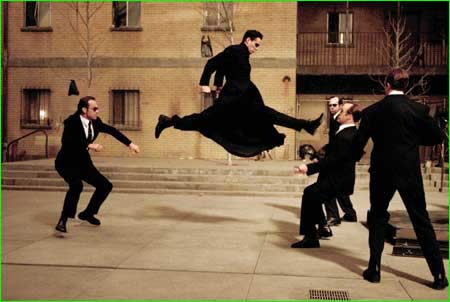
What's the best Trilogy?


Friday, June 20, 2008
Back From Georgia

I'm back from Georgia. It's hard to describe a two week cultural immersion in words. I could briefly say that our group traveled all around the country meeting with the local Baptist churches. We visited orphanages, refugee villages, the tourist traps, Turkey (kinda, we got stuck between the two countries, long story), played soccer, and scaled the Caucus mountains, chilled in Amsterdam during our layover, and drank a lot, a lot, a lot of wine.
The most amazing thing to me was the hospitality of the people. It was ridiculous. Families with next to nothing were everything out their kitchens to serve us food. They were sleeping on chairs so we could have their beds. They were buying us gifts, ironing our clothes, giving us their homemade wine, and literally waiting on our every move.
If I had a stranger that I couldn't speak to and didn't know come into my apartment to stay I would give them my couch, not my bed. I would offer some cereal, not eggs and bacon. I would watch my valuables, not give them to be used. I would protect my space, not open it up.
Tuesday, June 10, 2008
What color's your dreamcoat?
There’s a story about a man who owed his king a debt he couldn’t possibly repay. He pleaded with the king to be patient as he repaid what he could. In pity the king cancelled the man’s entire debt. On his way home, the man ran into his neighbor who owed him a small debt. His neighbor pleaded with him to be patient as he would repay it in full. The man demanded the debt immediately, then had his neighbor jailed for failing to pay. When the king heard about this from his servants, he was furious.
You can imagine how the story ended.
Nearly all men can stand adversity, but if you want to test a man's character, give him power.
- Abraham Lincoln
The real test of character is how you treat someone who has no possibility of doing you any good.
- George Orwell
Friday, June 06, 2008

Thursday, June 05, 2008
Leaving

I'm heading to the Republic of Georgia tomorrow morning with some classmates from Northern Baptist Seminary. Any prayers would be appreciated. Blessings and I'll try to post on the experience later.
Mike
Mission Possible (Get it? It's a Pun! Hahahaha)

I really like to be in control of things. With my work schedule I am in control of nothing. I have about 5-6 random jobs to bring income. In a way it's like I'm Ethan Hunt for Mission Impossible. Every morning I wait for that elusive, mysterious phone call with the words, "this is your mission, should you choose to accept it." Ok, not quite. Here is the brief rundown of what will be on my tax return for employment.
-Ropes Course Facilitator-I work when groups schedule
-Conference Center Laborer- Again when groups randomly schedule
-Gutter Cleaning-When my friend calls me
-Landscaping-Whenever the owner calls me
-Drywall/Home Improvement-Whenver my friend calls me
-Substitute Teaching-Done for summer but also whenever the phone rang
I like the variety but I hate the uncertainty. Am I going to work this week? How am I going to make money? How should I work out my schedule? Should I make plans in advance?
In midst of me trying to control and manage and maintain my life there is God. I have never been left wanting, or waiting, or needing.
Yes, I will work this week. Yes, I will make money. Don't worry about your schedule. Go ahead and make plans.
God is faithful and even if I have a week where I don't work a single minute God is still faithful. All my coordinating and worrying will not change what is ahead. I trust that God is in control and I can rest in that promise.
Saturday, May 31, 2008
Getting the Proportions Right
A few years back when Supreme Court Judge Samuel Alito was going through Senate confirmation, I was watching the hearings on CSPAN. I know, I know. It’s not as important as ESPN, MTV, or CNN Headline News, but I was watching it. Essentially, the hearings consisted of a bunch of Judge Alito’s friends and colleagues providing testimony about his views and his character. I like that for some reason. What would it be like if all your friends had to testify about your character? Whoa.
I only remember one quote out of the whole time I watched. One of Judge Alito’s colleagues, a fellow judge, I think, made one remark that stuck with me. He said, “He does not mistake the obscure for the profound.”
When I heard that, I said to myself, I want to be like that someday (but I have no clue how to). I think it struck me because I recognize how easily I seek out the obscure for its obscurity or its cleverness or its newness. Being the first to find something garners high praise these days. Maybe it’s just me being white.
In a culture of “lies, hype, and spin,” the possibility of discovering a diamond in the rough is something that feels authentic and genuine, not pushed upon us by advertisers. The disillusionment comes when we find someone who found it before we did. This happened to me when I was talking with my friend Dan about The Myriad. Music is a popular segment of white culture where we search for the obscure in pursuit of the profound. This is probably why we like to root for the underdog too: They’re less popular (see Aladdin, whom Jafar calls “a diamond in the rough”).
But Judge Alito, according to his colleague, knows how to place value in proportion to its significance. He judges well. And that’s something I would love to be true of me, but I just get distracted and read blogs. Placing my values and affections on worthwhile things is part of what I think Christian spirituality is about: seeing what God values and valuing it in a similar proportion. Most of my brokenness expresses itself by mistaking the worthless for the worthwhile. I run after things will make me happy, comfortable, or safe. Meanwhile, God is calling for sacrifice, struggle, and danger, but only because the rest of the world lives in contradiction to how God set the world up to run.
For me, maybe watching CSPAN instead of MTV, ESPN, or CNN was a subconscious attempt to find something of lasting value from a medium that pushes short-term benefits. And therein lies the paradox: I was again looking for the profound from an obscure TV network, and this time I found it. In a culture of “lies, hype, and spin,” a tyranny of the loudest voices and biggest shows drives out the voices of lasting value (still, small ones?) and shows of real significance.
And so, our ongoing search for the profound leads us into the realm of the obscure, but only because the realm of the obvious is ruled by the trivial. And perhaps it echoes another way of seeing the world, one in which the visible things are temporary and invisible things eternal. But seeing the world with eyes for the eternal means going beyond the five senses. And I think that’s what he meant when he said, “Those who have eyes to see and ears to hear should listen and understand.”
Articles that inspired this post:
How Small Stories Become Big News from Politico.com
The Twelve Men from G.K. Chesterton (HT: Chaka; HT: JT; HT: John Piper)
Technolochurch from Ed Stetzer
How Technology Relates to Permanence, and What That Means for Christianity from Consumed
The Internet Effect on News from Time Mag's Swampland
Wednesday, May 28, 2008
Indy Marathon

There is another big race in the State of Indiana this month, the Sunburst Marathon.
Something that is a big part of my life, but I don't talk too much about, is physical activity. I think it is an important part of spirituality. So multiple times a week I play soccer with the teams, bike to work, lift, or run. I find the communal physical activities (soccer, biking, softball) to be really rewarding because it draws me alongside other people.
The more personal exercises are rewarding as well but much more difficult. Running for me has been highly personal since college and an activity I enjoy. Right now, as much as aI love running and races, I don't think I could do a marathon. Give me some 5Ks and I'm there but 26.2 miles sounds daunting.
Which is why I have mad props for people who run marathons. So I'm giving it up to my brother in law, Eric, who is running the Indianapolis Marathon this weekend.
You thought the State of Indiana possessed the city of South Bend. Yes, that is right for now. But after this week it will belong to Eric Weiss because he is going to "own" that Marathon. Get it done bro!
Blogging, or How to Converse in a Group Setting
Back in the day, or so I've heard, guys and girls went to dances without dates. At one dance, a guy with a wooden-eye showed up. With his other eye, across the dance floor, he spotted a girl he wanted to dance with. Her only defect with a hair-lip. Getting up the nerve, he finally stood and crossed the gymnasium. She saw him coming and grew nervous and excited.
"Would you like to dance?" the guy sputtered.
"Would I! Would I!" she exclaimed.
His heart beating with anxiety turned quickly to anger. "Hair lip! Hair lip!" he retorted and stomped away.
My dad told me this joke. Then he told me about the time his garrulous pastor began to tell it to a new acquaintance. It wasn't until halfway through the joke that the pastor realized: He was telling the joke to a man with a hair-lip.
What are you saying, and who's listening?
When I started reading blogs a few years ago, one of the blogs I found was from a then-fellow Minnepolitan (?). He wrote a lot about theology and relationships. I enjoyed both, but among my favorites were his writing on the subject of awkwardness and his articulation of the ladder theory of relationships. I recently returned to his site to find it a shell of the blog I remember. It had been transformed. I went to his profile page and found this:
On my old blog I used to tell a lot of stories about awkwardness. I love awkwardness. But I don't so much anymore. Telling stories involving other people and posting them on the Internet for all to see usually embarrasses them in ways they rather not be. So I don't do that as much. My rules of blogging basically boil down to 1) never blog about your dating life, 2) never blog about your work, 3) never blog about stuff that gets said about so-and-so at church. Learned the hard way on all of them.
His shift away from awkwardness I attribute to a bit of maturing in his late 20s. But these other things, it seems, are a few painful pearls of wisdom. He writes out of experience. Perhaps any of his three rules could be broken, but not without caution.
I was talking to some colleagues about the relational impact of blogs. One colleague told me how she had an acquaintance who had started reading her personal blog. My colleague writes about herself, her concerns, and her interests. As a result, her acquaintance found that they had more in common than either one had realized. These common interests helped them move from acquaintances to friends.
These two stories and their opposite outcomes make me wonder what made them turn out so different. These consequences are significant. Discerning their differences, seems valuable to reap the benefits and avoid the perils. I see two variables distinguishing these stories: who you're writing to and what you're writing about.
Who are you writing to? For me, I know that my colleagues and my roommates read this. I have a responsibility, like it or not, to consider whether what I say may communicate something I don't mean or something I do mean but shouldn't say.
Maybe your grandmother isn't reading your blog, but would you be concerned if she did? Of course, she's not interested in your rock'n'roll, but she's interested in you, so she may read it anyway.
What are you writing about? Writing about impersonal topics like book reviews, political analysis, gaming news, or business advice has little bearing on your relationships with friends and loved ones. Writing about your love life, your weird family, your personal beliefs, or your job all have the potential of revealing more than you intended and to people closer than you expected.
Acquaintances have no context for why you've been thinking about jealousy lately, but those close to you can probably make a good guess. And even if they're wrong, they might never know that. This can create (sometimes, unnecessary) resentment, hurt, or distance in a relationship. You may be vague and oblique as to why you've been feeling jealous lately, but those close to you will care enough to wonder why.
As I listed tips for text messaging in my last post, I noticed that they were simply good tips for any interpersonal communication-not limited to texting. Similarly, when blogging, thinking about what you're saying and whom you're saying to are good considerations for any group context.
Principles that make good communication, make good high-tech communication too.
Saturday, May 24, 2008
White Bread

I just got "marketed." Being marketed is becoming a victim of a ploy by a commercial organization trying to sell their product.
So I'm at Panera with Dan and Rachael. I went to get some food and recalled that you can order slices of their bread. I was in a bread mood so I thought, "why not?"
Looking over my options I saw Whole Grain White Bread. I thought, "Wow. What's so special about that? Whole Grain White Bread. Amazing!"
After I ordered and brought it back Dan and Rach asked what I got. I proudly told them, Whole Grain White Bread." Like it was some hidden relic I unearthed from the catacombs of an Italian bakery.
Dan looked at me, "You got white bread?"
And I realized I just ordered two slices of white bread. (Although I did put honey and butter on it) (And I'm sure my order entertained the 18 year old working the counter).
So after realizing my random decision and trying to rationalize it to them, with no avail, I told them I was going to try all of Panera's bread and rate it on my blog. (Which I won't do).
If you want to know, Panera's Whole Grain White Bread taste like...well...like white bread.
But...it's whole grain!
Subscribe to:
Posts (Atom)
