Here is a text message:
“I can’t believe you sent me flowers!”
Here are a few ways this message could be interpreted:
1. “They’re beautiful! I love you! I wasn’t ever really mad at you in the first place.”
2. “Do you really think you can get off that easily? This is a way bigger issue than some stupid flowers are going to resolve. You’re in a deeper hole now.”
3. “You embarrassed me at work. Why would you do that?”
4. “I’m surprised. You don’t seem like the kind of guy who’d send me flowers. I really had lower standards for you.”
5. “They’re ugly.”
If, as they say, 90% of communication in nonverbal, texting leaves a meager 10% to be interpreted and get stressed about. Even something as innocuous as “Thanks for the flowers” would have many of the same possible interpretations.
This context problem is most exaggerated with text messaging. Text messaging is basically instant messaging crossbred with cell phones. But subtract from IMing the "in-front-of-the-computer" context, and subtract from the cell phone the background noise context. These context clues are gone with text messaging; the texter could be anywhere (at a party, in the shower, on the road, out of range), distracted (talking with a friend, sleeping), or simply busy (being mad at you, recharging a dead battery, in a meeting, working).
Without context, much the meaning of the content is left wide open, as the flowers scenario shows. Even if the texter is feeling joy when she writes the text, the receiver may be experiencing a different fear or insecurity and so interpret her text as indignation.
Text messaging is a simple idea, but it could be the most complex form of communication that people are using today, simply for the lack of context it provides for any texting conversation. So I came up with a few good practices for communicating (and conveying context) in text messages. Please offer your own, if you think of any.
1. Being intentionally vague isn’t a good idea. Maybe you mean to be flirtatious, but it may just look like you’re avoiding the question. The more personal the communication the more important it is to be careful how you say it.
2. Use “lame” obvious cues like smiley faces and exclamation points to indicate the accurate emotion.
3. Consider the worst possible interpretation your words could have, or the worst scenario that could result from them.
4. Avoid subtlety, sarcasm or otherwise. Exaggeration can even be difficult.
5. Don’t be impulsive. Consider your words. (This is a good rule for any sort of communication.)
6. Make the implicit explicit.
7. Don’t have conversations via text messaging. This opens the door for every sort of problem.
8. Use texts to communicate information, not feelings. (“Just the facts, ma’am.”) If it's getting personal, personalize it with a phone call or even in person!
There are lots of other rules and dynamics that could be explored, but hopefully this will help you think about it a bit and guard your friendships and relationships from unnecessary harm.
Tuesday, April 29, 2008


Thursday, April 24, 2008
Child Vision
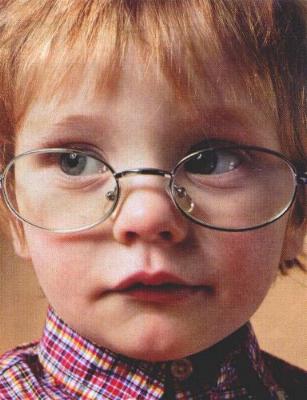
I don't know what sparked this memory but it re-surfaced a couple of days ago. Disclaimer: I have no experience raising children.
This summer while waiting in the doctor's office (to get the good ol physical for teaching) the sirens in the city went off. When I pulled in the sky was radically pink sky and now morphed into a teal monster. Rain, lightning, and of course some tornado watches and warnings.
So me and all the other patients in the waiting room gathered in the back hall with the doctor's and nurses. I was comforted to be around physicians in a dangerous situation but less than thrilled to be sharing tight space with a bevy of germs!
At first it was kinda fun. We all made small talk and joked.
After about 30 minutes people were on their cell phones giving updates.
After about 45 minutes people were frustrated, uncomfrotable, and annoyed.
My brother was waiting for me back at the apartment. We had some plans (something about us driving together up to Michigan so he could get married, nothing big!) but he was of course easygoing and chilled.
What kept me calm was the little 3 year old sitting across from me on the floor in the hallway. He found the situation to be absolutely amazing. All the new people, lights, nooks and crannies in the hallway.
His mom was not as entertained. I'm sure she was stressed and overworked. Finally she sat him down and said, "look around you. Stop and look around you. Do you see anyone else acting that way? Is anyone else climbing all over everything in sight?"
I thought, "Is anyone else 3 years old?"
I thought, "Does anyone have so much joy as your son in this inconvenience?"
Often we correct children not because they aren't acting right but because they aren't acting like us. Maybe they should be correcting us. Maybe we should see like them.
Monday, April 21, 2008
TV Turnoff Week

Here's a challenge, no T.V. for a week!
If you can't imagine doing forgoing The Office, Sportscenter, American Idol, the NBA playoffs or some D.I.Y TLC show than try one or two days.
Good luck, hope to hear some people are going for it.
Friday, April 18, 2008
no habla Espanol

I'm teaching Spanish today. I know barely any Spanish except for some greetings and naughty words.
I really enjoy subbing. The day is well structured, the kids are great, the pay is surprisingly good, and it is a new challenge every day.
But this is what I don't like about subbing. As a substitute teacher your authority comes via threats. For instance:
get this work done or else it's homework
be quiet or else your teacher will be angry
listen to me or else you will go to the Principal's office
be respectful or else you don't have recess today
I don't see the benefit of using these tactics. Sure, it gets the kids to respond but any relationship built on threats resorts to fear not love. Permanent teachers have the advantage of seeing the kids every day and building relationships to nurture and mentor them. I on the other hand do not.
So what do I do? Well, in the short time I have with them I try to create as deep of a relationship as possible. How?
I call out their names for attendance and ask them how they want to be called.
I tell them about where I am at in life.
I share a story maybe from the news.
Better yet I share them a story from my own life that is connected to their class. Like....
How most of my Spanish is from movies I've watched and by the way these are my five favorite movies.
Or I don't know Spanish but it would have been helpful when I went to Venezuela to do a mission trip.
Or I know some Spanish by watching a lot of soccer which is one of my passions.
I try to connect my life with their life. I try to make a friendship and than teach.
Wednesday, April 16, 2008
My Team is Powerful!
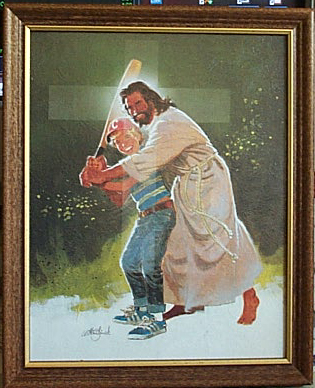
I actually have a lot of things brewing in my mind but not a lot of time to post. So this will be short and pithy and an echo of an earlier post.
Last night a Cubs fan said to me when finding out I am a Pirate fan, "oh, we have you next. You better look out, we are going to take you out."
I couldn't help but notice the personal pronouns, we and you.
It wasn't simply this girl saying that her team was going to beat my team. But in a sick sense it was her taking dominion over me. She was exerting power over me by claiming the Cubs were better than the Pirates (which is hard to argue otherwise).
I realized that our sports teams are really exercises of our power. That is why we love it when our team wins, because it vicariously gives us power and a sense of accomplishment. Like we have conquered somebody else and achieved a level of status in the world.
I think if Jesus was a baseball team he would be in last place.
Monday, April 14, 2008
The Well of Beer
At a place called Beer, the Lord provided a well for his people.
There the Israelites sang this song: "Spring up, O well! Yes, sing its praises!"
Numbers 21:17
There the Israelites sang this song: "Spring up, O well! Yes, sing its praises!"
Numbers 21:17
Saturday, April 12, 2008
That's the technology talking.
We’d call anyone stupid who used a saw for a can opener, or a pickaxe as a nutcracker. No, using the right tool for the task helps lower the risk of hurting ourselves (or others). The stupidity of these simple examples is plain to us because these tools are so low-tech, but we still learned these facts at one point or another. With high-tech tools though, the tasks they accomplish are much more complex, but likewise their purposes are much harder to discern.
Blogs. Blackberrys. Facebook messages. E-mail. Cell phones. Wall posts. Text messages. Of these, the only one I’ve not used is a Blackberry. In the past two years, every other mobile device and social networking tool has been in my relational toolbox. The ways to communicate keep multiplying. Staying connected is easier than ever.
I don’t need to tell you though that for all these tools, we’re not building better relationships. In high school, I was IMing with this one girl in my group of friends. I’d never really known someone to be so into other people’s lives and so willing to talk about them. During one online chat, I told her bluntly, “You’re a gossip queen.” Looking back, I can hardly believe I was so unkind. Who cares if it was true . . . what was I thinking?
This is sort of like the morning after being drunk. You remember enough of what you said last night that you have to call to apologize. You blame it of course on having too much beer. But in this case, the insulated feeling created by telecommunications is a false sense of security and the relationship suffers for it. "Baby, it was the technology talking! Please forgive me." Damage done.
I’ve found these new communication tools to be poor at building meaningful, healthy relationships with anyone. Maybe two years ago, I was discussing with a friend via email issues we both care about passionately. But over time, I sensed it slowly deteriorating, my own feelings toward him growing irritable, hurt, and even angry. It had never been like that before, when we’d talked face-to-face. What changed?
I’m not lamenting the poor quality of these tools though (or you could call use the word technology). In fact, I don’t think that these tools are poor quality. Rather, I think it’s user error. That is, I’ve used these tools poorly, inebriated with high-technology. As a kid, I always tried to be innovative and use an old tool in a creative way. (If you’ve ever watched The Red Green Show, they do this best.)
Can we really compare cell phones to pickaxes or e-mails to handsaws? Well, all of them are different types of technology humans use to accomplish various tasks. With communication tools, the relational element to them adds near infinite complexity alone. But they are still tools used for communication.
And while the purpose of a pickaxe seems pretty intuitive, it’s only because we’ve learned it. In the same way, the purpose of these high-tech communication tools will only become apparent if we really give them some thought. After that, they’re purposes might seem intuitive as well.
I'm only exploring the answers when it comes to these gadgets. I’ve tried to use them to accomplish certain tasks and relationships have suffered and bridges have burned because of it. Just like being the fool using a pickaxe for a peanut, I don’t want to look stupid or get hurt (or hurt others) just because I didn’t know what I was doing with the tool in my hand. Better than that, I won't have to call the next day to blame it on being technologically impaired.
Blogs. Blackberrys. Facebook messages. E-mail. Cell phones. Wall posts. Text messages. Of these, the only one I’ve not used is a Blackberry. In the past two years, every other mobile device and social networking tool has been in my relational toolbox. The ways to communicate keep multiplying. Staying connected is easier than ever.
I don’t need to tell you though that for all these tools, we’re not building better relationships. In high school, I was IMing with this one girl in my group of friends. I’d never really known someone to be so into other people’s lives and so willing to talk about them. During one online chat, I told her bluntly, “You’re a gossip queen.” Looking back, I can hardly believe I was so unkind. Who cares if it was true . . . what was I thinking?
This is sort of like the morning after being drunk. You remember enough of what you said last night that you have to call to apologize. You blame it of course on having too much beer. But in this case, the insulated feeling created by telecommunications is a false sense of security and the relationship suffers for it. "Baby, it was the technology talking! Please forgive me." Damage done.
I’ve found these new communication tools to be poor at building meaningful, healthy relationships with anyone. Maybe two years ago, I was discussing with a friend via email issues we both care about passionately. But over time, I sensed it slowly deteriorating, my own feelings toward him growing irritable, hurt, and even angry. It had never been like that before, when we’d talked face-to-face. What changed?
I’m not lamenting the poor quality of these tools though (or you could call use the word technology). In fact, I don’t think that these tools are poor quality. Rather, I think it’s user error. That is, I’ve used these tools poorly, inebriated with high-technology. As a kid, I always tried to be innovative and use an old tool in a creative way. (If you’ve ever watched The Red Green Show, they do this best.)
Can we really compare cell phones to pickaxes or e-mails to handsaws? Well, all of them are different types of technology humans use to accomplish various tasks. With communication tools, the relational element to them adds near infinite complexity alone. But they are still tools used for communication.
And while the purpose of a pickaxe seems pretty intuitive, it’s only because we’ve learned it. In the same way, the purpose of these high-tech communication tools will only become apparent if we really give them some thought. After that, they’re purposes might seem intuitive as well.
I'm only exploring the answers when it comes to these gadgets. I’ve tried to use them to accomplish certain tasks and relationships have suffered and bridges have burned because of it. Just like being the fool using a pickaxe for a peanut, I don’t want to look stupid or get hurt (or hurt others) just because I didn’t know what I was doing with the tool in my hand. Better than that, I won't have to call the next day to blame it on being technologically impaired.
Tuesday, April 08, 2008
Take A Minute
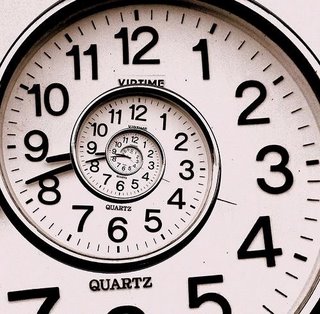
You have a lot of things you could, should, want, need to do.
Right now you are reading my blog.
Stop.
Think about somebody close in your life you will talk to today.
Put the laptop down or push back from the computer monitor.
Take 60 seconds. That's right a full minute! You will have several more of these today. Take that minute and pray for that somebody.
That wasn't hard was it?
Saturday, April 05, 2008
Are you watching Me?

Sometimes I just feel obligated to post something. This is one of those times! So we'll see where this goes.
I tend to be a private person over the Internet so I'm going to step outside and share where I am, what I'm doing. Just in case you are desperate to spy on me.
I'm reading a lot about Spirituality and Galatians
I'm listening to Steven Delopolous and Umbrellas
I spend time with friends here, here, and here
And of course here
I'm watching Dan Lugo
I'm loving the weather
I'm optimistic
I love playing here
You can stalk me here
That didn't take too long.... :)
Tuesday, April 01, 2008
There's a Cubs shaped Hole in all of Us!

Hi, I’m Rick, another roommate of Mike’s taking over his blog. Apparently I need to be careful what I say around him, because yesterday I just happened to make what I thought was a fairly clever and witty observation, and now he is forcing (yes, forcing!) me to post said observation on this blog.
So without further ado, here is the thought I had. Mike and I were watching a little bit of baseball on Monday (the REAL opening day) and we got to talking about annoying sports fans (specifically certain cubs fans that we know, my goodness can they ever be insufferable…) Anyway, I made the comment to Mike that I think Christians can be some of the worst (read: most annoying) sports fans in the history of sporstfandom. Allow me to unpack that (I had a communications professor in undergrad who used the word unpack at least once every class, it was annoying, and now I cannot escape the word…but I digress.)
Christians, at least in the evangelical tradition in the
Mike's Disclaimer** Rick's doesn't really hate the Cubs that much but we do share the annoyance of some Cub's fans "sportsfandom."
For the Tigers I also say "go" and for the Pirates I say, "Can we end the season now so they finally have a winning season!"
Monday, March 31, 2008
Getting Funky with Jesus

Word are always limiting to an extent. They are all we have been given. The reason I like the word perichoresis (over personal) is because it is language rooted in the character of God, not the character of the self. It is a word designated for the Trinity so it draws from the Trinitarian life.*
Perichoresis describes the mutual dwelling and shared relationships of the members of the Trinity. The word can be broken down to mean around + dance.
I love the image of the persons of the Trinity dancing together in harmony and inviting humanity to join in. Our relationship with God invites active participation with the movements of the Spirit.
Imagine someone dancing by themsevlves. It's hilarious. The music is playing and they go out on the dance floor and move without a partner. That is how most of our spiritual lives are. I choose the music, I push play, I lead the dance, I choose the steps, etc.
But a "personal" relationship with God is different. It's God's playlist, God's pushing, God's pulse, God's performance. A simple challenge for me is to daily find myself entering that cosmic activity. So today I hope you can dance and get funky with God!
*Ironic that the word personal, rooted in the word person, created some controversies in early Trinitarian theology! The Eastern church Fathers, first ones to write about the Trinity, described it as one ousia and three hypostasis. Tertullian, the first Western theologian, (he wrote in Latin, not Greek) described God as being one substance and three persons. This seems innocent enough if ousia=substance and hyspostasis=persons. But in the West, Tertullian, translated both ousia and hyspostasis=substance. So Tertuallian asserted that God is one ousia/hypostasis and introduced the word three persons.! Semantics, semantics!
Saturday, March 29, 2008
Word for the Day
When I was in high school my English teacher got a gift for his birthday. It was a free subscription to the now defunct website once listed at www.wordsmith.com. The process involved filling in your e-mail address and automatically geting a new word sent to you everyday.
First, that is an awful birthday gift. Look I am all about being cheap and creative and sentimentel but come on. Seriously. Is that the best you can do? The idea sounded great to me and I actually subscribed for about one year even though I quit opening the e-mails after about a week. I like to learn new words and what they mean but am pure rubbish at putting them into practice.
Every once in ahwhile a new word will absolutely capture what was void in my vernacular.
When describing my relationship with God the word I frequently think of is personal. Many cry against this word because it alludes to a "me and only me" spirituality. Sure, I agree, a personal relationship with God is not a simple two way conversation. It does include the social aspect of caring for our neighbor.
I'll unpack this more later, but the word I am choosing is perichoretic
First, that is an awful birthday gift. Look I am all about being cheap and creative and sentimentel but come on. Seriously. Is that the best you can do? The idea sounded great to me and I actually subscribed for about one year even though I quit opening the e-mails after about a week. I like to learn new words and what they mean but am pure rubbish at putting them into practice.
Every once in ahwhile a new word will absolutely capture what was void in my vernacular.
When describing my relationship with God the word I frequently think of is personal. Many cry against this word because it alludes to a "me and only me" spirituality. Sure, I agree, a personal relationship with God is not a simple two way conversation. It does include the social aspect of caring for our neighbor.
I'll unpack this more later, but the word I am choosing is perichoretic
Wednesday, March 26, 2008
What's the word?
But are we? Are we made to be happy? [...]why are we so perpetually in search of it [...] what are we missing that will consummate it?
-Adam Graber
I wish Adam would get with the program and post again. I'm half joking and three-fifths serious because his previous post really intrigued me. So I am going to gank his stream of ideas.
My thoughts center on the word happy in the Bible. In the Greek the word is makarios. Depending on the translation the word is used differently
Blessed (makarios) are the peacemakers, for they will be called children of God. (Matt. 5:9 TNIV)
But the word makarios also means happy
Happy (makarios) are the peacemakers -- because they shall be called Sons of God. (Matt 5:9 YLT)
Even in the Hebrew, (like Psalm 1:1 and 119:1) the word esher often translated as blessed also means happy
I do not interpret happy and blessed to be the same thing. In my modern translation (even though I'm so post-modern...haha) this is the definition
happy=state of mind, like being in a good mood.
blessed=state of being, like having money.
If happy=blessed how does that change our pursuit of happiness?
(By the way the end of the movie Pursuit of Happyness.... terrible ending)
-Adam Graber
I wish Adam would get with the program and post again. I'm half joking and three-fifths serious because his previous post really intrigued me. So I am going to gank his stream of ideas.
My thoughts center on the word happy in the Bible. In the Greek the word is makarios. Depending on the translation the word is used differently
Blessed (makarios) are the peacemakers, for they will be called children of God. (Matt. 5:9 TNIV)
But the word makarios also means happy
Happy (makarios) are the peacemakers -- because they shall be called Sons of God. (Matt 5:9 YLT)
Even in the Hebrew, (like Psalm 1:1 and 119:1) the word esher often translated as blessed also means happy
I do not interpret happy and blessed to be the same thing. In my modern translation (even though I'm so post-modern...haha) this is the definition
happy=state of mind, like being in a good mood.
blessed=state of being, like having money.
If happy=blessed how does that change our pursuit of happiness?
(By the way the end of the movie Pursuit of Happyness.... terrible ending)
Sunday, March 23, 2008
The Tyranny of Happiness
I’ve recently seen a spate of articles on happiness. It seems that a few new books on the subject have been on the radars at Newsweek, New York Times Review of Books, and the Washington Post. Most specifically, a new book titled Against Happiness is getting noticed. The cover is perfectly designed: a yellow cover whose title is in the shape of a frowning mouth. It reinforces the book’s ideas—perfect.
From what I’ve read, psychologists are retrieving meaning and purpose in melancholy. I don’t need to prove to you that we are a people bound and determined to be happy, with our self-help books, our bigger and better whatevers, and the advertising that keeps telling us bliss exists. In a country where the pursuit of happiness is as basic a right as living, the concept that being thoughtfully sad is necessary seems quite foreign. Melancholy? Leave that to Russia.
Even while the contrarian in me revels in the idea that maybe constant happiness isn’t so great, something more fundamental to the argument is being made here: Sadness is beneficial, and whatever’s beneficial will make you happy. Whether or not sadness will in fact make you happier, the belief is that embracing sadness can lead us back around to happiness. The story is the same tired refrain. Our pursuit of happiness simply becomes more nuanced, more subtle. We don’t come at happiness head on, but flank it by embracing its opposite. We humans are so clever.
Upon reflection, this approach really isn’t new though. We’ve always sought to flank happiness by pursuing something else. Our real aim is happiness, but we know we can’t just take it by the horns (or its soft, huggable middle). So we flank happiness by getting lost in good books, faraway places, success, lovers, dreams, or ___________. And if we’re not careful, those things, those people become weapons we use in our back-end assault on happiness.
I don’t think there’s anything wrong with the desire to be happy. There are needs embedded in us that drive us to search for it. Nearly every desire in man is a good one that has only been perverted and recalibrated on the wrong objects. It’s as though we set out exploring the seas using the stars as our guide, but we’ve fixed on the wrong star. We’re doomed to wander instead of discover. In this country where life, happiness, and freedom are rights fundamental to existence, we come to believe, as we live, that we are made to be happy.
But are we? Are we made to be happy? I don’t have the answer, only the question. If we are, then why are we so perpetually in search of it. If we are, then what are we missing that will consummate it. Perhaps believing that we are is like believing the world is flat (the Christopher Columbus version, not the Thomas Friedman version). This belief that happiness is our ultimate goal could be holding us back from a fuller understanding of who we are and of what the world is like. The world could be much bigger and grander than flat happiness could let us imagine. O, the glorious possibilities as we spin the globe and consider them.
4.12.8 Update: "Married, religious people are more likely than secular singles to be happy"? "It helps to be religious, sexually active and a college graduate with a short commute to work."
From what I’ve read, psychologists are retrieving meaning and purpose in melancholy. I don’t need to prove to you that we are a people bound and determined to be happy, with our self-help books, our bigger and better whatevers, and the advertising that keeps telling us bliss exists. In a country where the pursuit of happiness is as basic a right as living, the concept that being thoughtfully sad is necessary seems quite foreign. Melancholy? Leave that to Russia.
Even while the contrarian in me revels in the idea that maybe constant happiness isn’t so great, something more fundamental to the argument is being made here: Sadness is beneficial, and whatever’s beneficial will make you happy. Whether or not sadness will in fact make you happier, the belief is that embracing sadness can lead us back around to happiness. The story is the same tired refrain. Our pursuit of happiness simply becomes more nuanced, more subtle. We don’t come at happiness head on, but flank it by embracing its opposite. We humans are so clever.
Upon reflection, this approach really isn’t new though. We’ve always sought to flank happiness by pursuing something else. Our real aim is happiness, but we know we can’t just take it by the horns (or its soft, huggable middle). So we flank happiness by getting lost in good books, faraway places, success, lovers, dreams, or ___________. And if we’re not careful, those things, those people become weapons we use in our back-end assault on happiness.
I don’t think there’s anything wrong with the desire to be happy. There are needs embedded in us that drive us to search for it. Nearly every desire in man is a good one that has only been perverted and recalibrated on the wrong objects. It’s as though we set out exploring the seas using the stars as our guide, but we’ve fixed on the wrong star. We’re doomed to wander instead of discover. In this country where life, happiness, and freedom are rights fundamental to existence, we come to believe, as we live, that we are made to be happy.
But are we? Are we made to be happy? I don’t have the answer, only the question. If we are, then why are we so perpetually in search of it. If we are, then what are we missing that will consummate it. Perhaps believing that we are is like believing the world is flat (the Christopher Columbus version, not the Thomas Friedman version). This belief that happiness is our ultimate goal could be holding us back from a fuller understanding of who we are and of what the world is like. The world could be much bigger and grander than flat happiness could let us imagine. O, the glorious possibilities as we spin the globe and consider them.
4.12.8 Update: "Married, religious people are more likely than secular singles to be happy"? "It helps to be religious, sexually active and a college graduate with a short commute to work."
Saturday, March 22, 2008
The In-Between
I remember pondering this last year and my Dad sparked it again with this observation:
We celebrate Maundy Thursday, Good Friday, and Easter Sunday. But what about today? What about the Saturday when Jesus was in the grave?
Sure it doesn't make sense to celebrate. Especially if you were one of the disciples. You have just followed a teacher to Jerusalem with the expectation that he was going to establish a worldly kingdom. One moment he comes into the city with "Hossana in the Highest," and days later he is surrounded by the words "crucify him!"
Today Jesus is dead. Today Jesus is in the grave. Today is often ignored.
As of today there is no resurrection, no life, no fulfillment, no hope. Of course we have the advantage of foresight. In our eagerness to celebrate tomorrow morning I think it appropriate to simply think about what it means that today Jesus is dead. I am not trying to be fatalistic or wallow in grief but how can salvation make sense about from despair?
Rather, how can we understand the power resurrection without understanding the gravity of death?
We celebrate Maundy Thursday, Good Friday, and Easter Sunday. But what about today? What about the Saturday when Jesus was in the grave?
Sure it doesn't make sense to celebrate. Especially if you were one of the disciples. You have just followed a teacher to Jerusalem with the expectation that he was going to establish a worldly kingdom. One moment he comes into the city with "Hossana in the Highest," and days later he is surrounded by the words "crucify him!"
Today Jesus is dead. Today Jesus is in the grave. Today is often ignored.
As of today there is no resurrection, no life, no fulfillment, no hope. Of course we have the advantage of foresight. In our eagerness to celebrate tomorrow morning I think it appropriate to simply think about what it means that today Jesus is dead. I am not trying to be fatalistic or wallow in grief but how can salvation make sense about from despair?
Rather, how can we understand the power resurrection without understanding the gravity of death?
Thursday, March 20, 2008
Rationalize
My professor Gary Sattler cited this quote in class. It is from the 1983 movie Big Chill
Michael: I don't know anyone who could get through the day without two or three juicy rationalizations. They're more important than sex.
Sam Weber: Ah, come on. Nothing's more important than sex.
Michael: Oh yeah? Ever gone a week without a rationalization?
Sam (Tom Berenger) typifies our obsession with sex. I'm more interested with Michael (Jeff Goldblum) insight into rationalization. I couldn't go a day, let alone a week, without a "juicy rationalization." Every day I justify my choices, actions, decisions, etc.
Think about it. Why do you do what you?
-Why did you put on that shirt today?
-Why didn't you call your Mom last night?
-Why do you want to go out to eat for Chinese and not Mexican?
-Why are you speeding on your way to work?
-Why do you like that song so much?
O.k. there is obviously a point to where this just gets neurotic and unhelpful. If you question every decision you'll dissect your soul until there is nothing left but little fragments of a self. However there is a healthy awareness, a generous vigiliance, needed in our lives. There is no place this is needed more than in areas of sin. Whereas the above questions are mostly pointless and have little redemptive value, we need to question sin.
In sin we rationalize and justify our actions.
For instance: I stole the money because I needed it. I punched him because I was mad. I cheated on my wife because I don't feel attracted to her anymore.
I think the best way to reconcile sin is to question it.
For instance. Why do you need the money? Why were you mad? Why don't you feel attracted to her anymore?
This is the point where most people just give up and walk away. We think these questions are just a Freudian attempt to get to our "real self" and undo all that society, parents, and pop culture has plagued us with. Like if we are able to remove all the layers of the onion than the "core" our "real identity" will emerge and thus we will be a better person. (Jungian psychology)
I would give up and walk away too. There is only so much I can unwind and dissect myself. Eventually I feel so undressed and exposed in my weakness.
But there is no power in sin when it is undone before God. When I question my sin I don't try to get to a more "ideal self" but I open myself up to being forgiven and reconciled to something far larger than a "real self." (I am not trying to live my story better, but I am being swallowed up by God's story. So in light of the Easter season I am reminded to take my sin and crucify it. But like Christ, the crucifixion is not something I can do on my own. It is a part of being obedient to where God is calling me to go.
So my challenge isn't necessarily to "unrationalize" your sin, but to rather crucify your sin and find redemption in the resurrection. So when you feel undressed, exposed, and weak you are clothed with the mercy of power of Christ.
Let us behave decently, as in the daytime, not in orgies and drunkenness, not in sexual immorality and debauchery, not in dissension and jealousy. Rather, clothe yourselves with the Lord Jesus Christ, and do not think about how to gratify the desires of the sinful nature
Romans 13:14
Michael: I don't know anyone who could get through the day without two or three juicy rationalizations. They're more important than sex.
Sam Weber: Ah, come on. Nothing's more important than sex.
Michael: Oh yeah? Ever gone a week without a rationalization?
Sam (Tom Berenger) typifies our obsession with sex. I'm more interested with Michael (Jeff Goldblum) insight into rationalization. I couldn't go a day, let alone a week, without a "juicy rationalization." Every day I justify my choices, actions, decisions, etc.
Think about it. Why do you do what you?
-Why did you put on that shirt today?
-Why didn't you call your Mom last night?
-Why do you want to go out to eat for Chinese and not Mexican?
-Why are you speeding on your way to work?
-Why do you like that song so much?
O.k. there is obviously a point to where this just gets neurotic and unhelpful. If you question every decision you'll dissect your soul until there is nothing left but little fragments of a self. However there is a healthy awareness, a generous vigiliance, needed in our lives. There is no place this is needed more than in areas of sin. Whereas the above questions are mostly pointless and have little redemptive value, we need to question sin.
In sin we rationalize and justify our actions.
For instance: I stole the money because I needed it. I punched him because I was mad. I cheated on my wife because I don't feel attracted to her anymore.
I think the best way to reconcile sin is to question it.
For instance. Why do you need the money? Why were you mad? Why don't you feel attracted to her anymore?
This is the point where most people just give up and walk away. We think these questions are just a Freudian attempt to get to our "real self" and undo all that society, parents, and pop culture has plagued us with. Like if we are able to remove all the layers of the onion than the "core" our "real identity" will emerge and thus we will be a better person. (Jungian psychology)
I would give up and walk away too. There is only so much I can unwind and dissect myself. Eventually I feel so undressed and exposed in my weakness.
But there is no power in sin when it is undone before God. When I question my sin I don't try to get to a more "ideal self" but I open myself up to being forgiven and reconciled to something far larger than a "real self." (I am not trying to live my story better, but I am being swallowed up by God's story. So in light of the Easter season I am reminded to take my sin and crucify it. But like Christ, the crucifixion is not something I can do on my own. It is a part of being obedient to where God is calling me to go.
So my challenge isn't necessarily to "unrationalize" your sin, but to rather crucify your sin and find redemption in the resurrection. So when you feel undressed, exposed, and weak you are clothed with the mercy of power of Christ.
Let us behave decently, as in the daytime, not in orgies and drunkenness, not in sexual immorality and debauchery, not in dissension and jealousy. Rather, clothe yourselves with the Lord Jesus Christ, and do not think about how to gratify the desires of the sinful nature
Romans 13:14
Tuesday, March 18, 2008
Tis the Season
In news this week:
This past weekend we celebrated St. Patrick's day.
These couple of days America is gearing up for the Men's College Basketball Tournament.
This month is known of "March Madness."
In other news:
This past Sunday was also Palm Sunday, when Jesus entered Jerusalem with praise and glory.
These couple of days Jesus prepares for the crucifixion in Jerusalem
This month marks the remembrance of the passion of Christ leading to Jesus' crucifixion and the beginning of the church.
This past weekend we celebrated St. Patrick's day.
These couple of days America is gearing up for the Men's College Basketball Tournament.
This month is known of "March Madness."
In other news:
This past Sunday was also Palm Sunday, when Jesus entered Jerusalem with praise and glory.
These couple of days Jesus prepares for the crucifixion in Jerusalem
This month marks the remembrance of the passion of Christ leading to Jesus' crucifixion and the beginning of the church.
Monday, March 17, 2008
Meditation on a Plastic Bag
I’ve been thinking again about spiritual disciplines and their purpose and effect. The last metaphor that helped me to understand it was a paper clip, bent so as to be useful, much like the posture—physically and spiritually—of humility and availability that is adopted by the one who prays.
A new metaphor that has helped me to understand spiritual disciplines more broadly is that of a plastic bag. I’m thinking of those typical bags I get when I shop at Target or at the grocery. A plastic bag is easily compact but useful when opened up. It can serve to carry more than I could pile into my arms.
But have you ever had trouble getting a bag open or trying to finagle some object into it when the opening is clinging shut? That’s so frustrating. I worked at a grocery store for two years, first bagging groceries. I showed those bags who was in charge.
I think of the soul as being like that bag. It is often shut up on itself, flat and useless, and even getting it open can be a chore. The spiritual disciplines I think of as that practice of opening up and creating space for what will be put in. Yet, practicing these disciplines does not mean that anything is put in, only that we are, like a bag, prepared to receive. Spiritual disciplines are not the contents for the bag, they are the space created for God.
Leaving ourselves open like that can be scary. When we create space, we create our own emptiness and acknowledge our need. It’s vulnerable. It is tempting to be filled with many things that God is not putting in. I think I allow music to shape my thoughts and emotions into a attitude or mood I want to experience instead of waiting for God to act.
But part of the discipline is to bear the need, to endure the emptiness. “More often than not we are left with the painful sense of emptiness and can only experience God as the absent God.” That’s why it’s really scary. To experience the absent God is to know that there is a space that only he can fill. But in its own way, that vacancy is way of knowing God. Experiencing the perpetual absence of God does not necessarily mean that God is absent but we have found new spaces where we need him.
Sometimes, to get a sandwich bag open, I blow into it. Or with a grocery bag, sometimes I whip it up then down to get the air inside to open it up. It makes me think of the Spirit of God (spirit and breath are a single term in Greek), as he might blow through our souls to open us up. And in fact, we talk about practicing the spiritual disciplines as if they are completely our doing, but it is the grace of God that empowers us in the first place to act. It is the hand of God that pulls at the handles and the breath of God that creates space in our souls for himself.
And then there are moments when God fills our bags with himself. Our silence with his sound. Our blank pages with his words. Our weeping with his laughter. And when he puts his Spirit within us, our souls, like those plastic bags, begin to take the form of that which fills it.
A new metaphor that has helped me to understand spiritual disciplines more broadly is that of a plastic bag. I’m thinking of those typical bags I get when I shop at Target or at the grocery. A plastic bag is easily compact but useful when opened up. It can serve to carry more than I could pile into my arms.
But have you ever had trouble getting a bag open or trying to finagle some object into it when the opening is clinging shut? That’s so frustrating. I worked at a grocery store for two years, first bagging groceries. I showed those bags who was in charge.
I think of the soul as being like that bag. It is often shut up on itself, flat and useless, and even getting it open can be a chore. The spiritual disciplines I think of as that practice of opening up and creating space for what will be put in. Yet, practicing these disciplines does not mean that anything is put in, only that we are, like a bag, prepared to receive. Spiritual disciplines are not the contents for the bag, they are the space created for God.
Leaving ourselves open like that can be scary. When we create space, we create our own emptiness and acknowledge our need. It’s vulnerable. It is tempting to be filled with many things that God is not putting in. I think I allow music to shape my thoughts and emotions into a attitude or mood I want to experience instead of waiting for God to act.
But part of the discipline is to bear the need, to endure the emptiness. “More often than not we are left with the painful sense of emptiness and can only experience God as the absent God.” That’s why it’s really scary. To experience the absent God is to know that there is a space that only he can fill. But in its own way, that vacancy is way of knowing God. Experiencing the perpetual absence of God does not necessarily mean that God is absent but we have found new spaces where we need him.
Sometimes, to get a sandwich bag open, I blow into it. Or with a grocery bag, sometimes I whip it up then down to get the air inside to open it up. It makes me think of the Spirit of God (spirit and breath are a single term in Greek), as he might blow through our souls to open us up. And in fact, we talk about practicing the spiritual disciplines as if they are completely our doing, but it is the grace of God that empowers us in the first place to act. It is the hand of God that pulls at the handles and the breath of God that creates space in our souls for himself.
And then there are moments when God fills our bags with himself. Our silence with his sound. Our blank pages with his words. Our weeping with his laughter. And when he puts his Spirit within us, our souls, like those plastic bags, begin to take the form of that which fills it.
Two Ways to Look at Someone
One Way: The Jesus Glasses
I remembered in college being challenged to see people as Christ sees them. This summer I gave a "message" (sermon, homily, whatever you prefer) that pretty much said our identity is found in God because we were created in God's image.
At one point I said the following:
When Jesus sat across from the woman (at the well) he didn't see a whore, but he saw a woman in need of healing. When God looked down at Saul on the road to Damascus he didn't see a villain but he saw a future disciple.
The idea behind this thought is that God/Jesus, (our model, perfecter of faith) sees people with a different lens, not as broken but as beautiful. In retrospect I struggle with this concept. It isn't that I disagree with it but I find it so daunting. I admit that I cannot look at people like Jesus does. It is a great challenge but it leaves me frustrated and discouraged.
Second Way: The Jesus Gene
Recently I was challenged to see people in another way. Not as Jesus sees them, but rather to see Jesus in them. For me this just works a lot better. I don't think one is "better" than another but when I look at someone as carrying the DNA of Christ, because they are a splendid part of creation, it is more encouraging.
The challenge still remains: how will you look at people today?
I remembered in college being challenged to see people as Christ sees them. This summer I gave a "message" (sermon, homily, whatever you prefer) that pretty much said our identity is found in God because we were created in God's image.
At one point I said the following:
When Jesus sat across from the woman (at the well) he didn't see a whore, but he saw a woman in need of healing. When God looked down at Saul on the road to Damascus he didn't see a villain but he saw a future disciple.
The idea behind this thought is that God/Jesus, (our model, perfecter of faith) sees people with a different lens, not as broken but as beautiful. In retrospect I struggle with this concept. It isn't that I disagree with it but I find it so daunting. I admit that I cannot look at people like Jesus does. It is a great challenge but it leaves me frustrated and discouraged.
Second Way: The Jesus Gene
Recently I was challenged to see people in another way. Not as Jesus sees them, but rather to see Jesus in them. For me this just works a lot better. I don't think one is "better" than another but when I look at someone as carrying the DNA of Christ, because they are a splendid part of creation, it is more encouraging.
The challenge still remains: how will you look at people today?
Saturday, March 08, 2008
What do I look like to you?
My posts have been absent the last two weeks. I have been writing papers and I thought about posting those but I don't think 15-20 pages of research is blogger material.
I wonder how I come across to people. Especially with people telling me the following this week
1) At Starbucks a lady says to me, "You look like you come here all the time, where is the clock?"
My response, "Actually this is my first time here, I don't know."
2) While subbing a kid says to me, "Mr. Moore I bet you play a lot of paintball. You look like a paintball player."My response, "I've played twice before, sorry." (What does a paintball player look like?)
3) While subbing another kid said to me, "Mr. Moore you look like Jesus."
My response, "Except I have about 5 inches in height, paler skin, lighter hair, and I'm guessing Jesus was good looking."
4) This is the best one, it happened last week while subbing:
A girl says, "Oh I thought you were our teacher, you look like her."
My response, "You know I'm not offended but if your teacher has a beard she is in the wrong profession (alluding to the circus)
My point? These assumptions, presumptions, expectations, interpretations, were wrong. I don't go to that Starbucks all the time, I don't play paintball, I do not look like the historical Jesus, and I can say with confidence I do not look like a 40 year old woman English teacher."
When we look at people we don't always see accurately. How than should we see?
Subscribe to:
Posts (Atom)
